 Business License
High Carbon Cast Steel Grit vs. Alloy Steel Grit: The Ultimate Guide for Surface Preparation
High Carbon Cast Steel Grit vs. Alloy Steel Grit: The Ultimate Guide for Surface Preparation
When it comes to industrial surface preparation, few abrasives deliver the raw efficiency and cost-effectiveness of steel grit. Whether you’re operating blast rooms, wheel blast machines, or specialized shot blasting cabinets, selecting the right media isn’t just about cleaning—it’s about optimizing your entire operation.
Two products frequently dominate the conversation: High Carbon Cast Steel Grit and Alloy Steel Grit. While they may look similar to the untrained eye, the differences in their composition, manufacturing process, and performance can dramatically impact your bottom line.
Here’s what you need to know to make the right choice.
---
The Core Difference: Composition & Manufacturing
The distinction starts at the foundry.
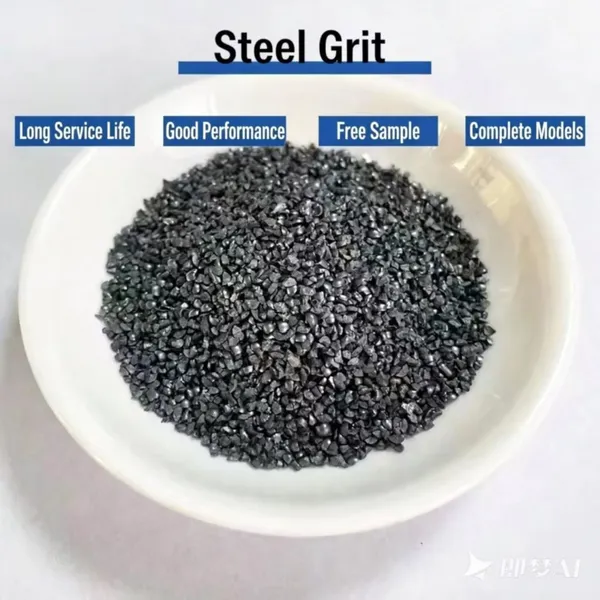
High Carbon Cast Steel Grit is manufactured from cast steel scrap. Its chemical composition typically includes Carbon (0.70–1.20%), Manganese (0.35–1.20%), and Silicon (≥0.40%), with strict limits on Sulfur and Phosphorus (≤0.05%) . The production involves a heat treatment process using a roller tempering furnace and air cooling, resulting in a uniform tempered martensite or troostite microstructure .
Alloy Steel Grit, on the other hand, is produced from higher-grade bearing steel. This raw material advantage gives it a more complex chemistry—including additional elements like chromium, nickel, and cobalt—which fundamentally alters its performance characteristics .
The manufacturing process for alloy steel grit is more sophisticated. It employs a box-type furnace for isothermal quenching, using a salt bath cooling method. This precise heat treatment procedure is what gives alloy steel grit its superior metallurgical properties .
Performance Metrics: Fatigue Life and Durability
This is where the numbers tell the real story.
Due to its advanced manufacturing and alloying elements, Alloy Steel Grit boasts a significantly higher fatigue life—approximately 3,000 cycles. By comparison, standard cast steel grit offers a fatigue life of around 2,300 cycles .
What does this mean for your operation? If you’re running high-volume, continuous blasting operations, alloy steel grit’s extended lifespan translates directly into:
· Reduced media consumption
· Lower material costs over time
· Decreased downtime for media replenishment
For applications where the abrasive is subjected to intense, repetitive impact, the premium cost of alloy steel grit often pays for itself through longevity.
Hardness Grades: Matching the Media to the Task
Both products are available in a range of hardness grades, standardized as GP, GL, and GH .
Grade Hardness (HRC) Best Application
GP 42 – 52 Foundry cleaning, desanding, and wheel blast machines where a balance of cleaning speed and wear-part longevity is critical. The grit tends to round off during use .
GL 53 – 60 Heavy descaling and aggressive surface preparation in both wheel blast machines and blast rooms. It provides a faster cleaning rate with a more pronounced angular profile .
GH 60 – 64 Surface etching, achieving a deep anchor profile for coating adhesion, and removing tough coatings in blast rooms and pressure cabinets. This grade remains angular throughout its lifecycle .
It’s worth noting that while GH-grade abrasives offer the most aggressive cleaning action, they can accelerate wear on your equipment. Many operators prefer GP or GL grades for wheel blast machines to protect the machine’s internal components .
Choosing the Right Abrasive for Your Operation
Choose High Carbon Cast Steel Grit when:
· Your application involves general-purpose cleaning, desanding, or rust removal.
· You’re using wheel blast machines where a less aggressive abrasive extends the life of machine parts.
· You need a cost-effective solution for standard fabrication, steel structure, or foundry work .
Choose Alloy Steel Grit when:
· You require maximum media longevity and reduced consumption costs in high-volume operations.
· Your application demands consistent angularity throughout the media’s lifecycle.
· You’re blasting hardened or high-strength materials that require a more aggressive abrasive.
The Bottom Line
Both high carbon cast steel grit and alloy steel grit are exceptional abrasives, but they serve different economic and operational models. Cast steel grit delivers reliable, proven performance at a competitive price point. Alloy steel grit represents a premium investment that yields returns through extended lifespan and superior hardness.
---
Ready to optimize your blasting process?
At [Your Company Name] , we supply premium-quality steel abrasives tailored to your specific requirements. With strict adherence to SAE standards, ISO9001, and ISO14001 certifications, our products deliver consistent performance, batch after batch .
Contact us today to request samples and a competitive quote.
---
Keywords: High carbon cast steel grit, alloy steel grit, steel grit blasting, surface preparation, shot blasting media, GH steel grit, GL steel grit, GP steel grit, rust removal abrasive, industrial abrasiveHigh Carbon Cast Steel Grit vs. Alloy Steel Grit: The Ultimate Guide for Surface Preparation

Contact Us
Recommended Products
-
 Your Trusted Partner for Sandblasting Abrasives | Angular Steel Grit Factory DirectNegotiableMOQ: 25 Metric Tons
 -
Global Supplier of Angular Steel Grit | Fast Delivery, Competitive Price, Technical SupportNegotiableMOQ: 25 Metric Tons
-
15+ Years Steel Grit Manufacturer | Custom Angular Grit for Rust Removal | ISO CertifiedNegotiableMOQ: 25 Metric Tons
-
Heavy-Duty Rust Removal? We’ve Got the Grit! ? Angular Steel Grit for Tough Jobs!NegotiableMOQ: 25 Metric Tons
-
From Rusty to Ready! ✨ See How Our Angular Steel Grit Transforms Metal Surfaces! #AbrasiveBlastingNegotiableMOQ: 25 Metric Tons
-
Why Choose Angular Steel Grit? ? Higher Impact, Faster Rust Removal! Watch Now! ?NegotiableMOQ: 25 Metric Tons
-
Say Goodbye to Rust! ?️ Our Angular Steel Grit Makes Surface Prep Fast & Easy! #Sandblasting #SteelGritNegotiableMOQ: 25 Metric Tons
-
Industrial Sandblasting Media: Angular Steel Grit for Efficient Rust RemovalNegotiableMOQ: 25 Metric Tons
-
Steel Grit for Rust Removal/Angular Steel Grit Supplier/Global ShippingNegotiableMOQ: 25 Metric Tons
-
Buy Angular Steel Grit Online | High-Quality Steel Abrasive for Rust RemovalNegotiableMOQ: 25 Metric Tons
-
Angular Steel Grit for Sandblasting | Best Abrasive for Rust Removal & Surface PrepNegotiableMOQ: 25 Metric Tons
-
High-Performance Angular Steel Grit for Heavy-Duty Rust Removal & Surface ProfilingNegotiableMOQ: 25 Metric Tons
-
Factory Direct Angular Steel Grit | SAE Standard, High Efficiency Rust Removal AbrasiveNegotiableMOQ: 25 Metric Tons
-
G12-G120 Angular Steel Grit Manufacturer | Industrial Surface Preparation & Rust RemovalNegotiableMOQ: 25 Metric Tons
-
Premium Angular Steel Grit for Sandblasting & Rust Removal | High Hardness & Low BreakageNegotiableMOQ: 25 Metric Tons
-
Stock Available in Various Sizes (S930 to S70): Ready to Ship WorldwideNegotiableMOQ: 30 Tons
-
Global Shipping: Fast Lead Time on Bulk Orders of Cast Steel Shot & GritNegotiableMOQ: 30 Tons
-
Reliable Supply Chain: 5,000+ Tons Monthly Capacity for Steel AbrasivesNegotiableMOQ: 30 Tons
-
Optimize Your Blasting Process: High-Carbon & Low-Carbon Steel Shot AvailableNegotiableMOQ: 30 Tons
-
Achieve Superior Surface Finish: Low Dust, Low Consumption Cast Steel ShotNegotiableMOQ: 30 Tons